How to organise your fridge so less food goes to waste
The right fridge temperature, a first-in, first-out routine, where leftovers go, and when to use the freezer, so nothing gets forgotten at the back.

KeepyWritten and checked by the Keepy team · 3 min read
The short answer
Keep your fridge at 5°C or below and check it with a fridge thermometer. Put new shopping behind what's already there, so the oldest food is always at the front: first in, first out. Cool leftovers and get them in the fridge within two hours, eat them within two days, or freeze them. The freezer works like a pause button.
Most food that gets thrown away at home isn't spoiled by bad luck. It's forgotten at the back of the fridge, or kept too warm to last. A cold fridge and a simple routine fix most of it, and they cost nothing.
Why it's worth ten minutes
The fridge is where small habits make the biggest difference. In the UK, WRAP found that food lasts up to three days longer in a fridge kept below 5°C, yet the average home fridge there was set to almost 7°C.1 Getting the temperature right and seeing what you have are the two things that help most.
1. Get the temperature right
| Source | Fridge | Freezer |
|---|---|---|
| UK Food Standards Agency | Between 0 and 5°C2 | |
| US Food and Drug Administration | 40°F (4°C) or below3 | 0°F (−18°C) or below3 |
| World Health Organization | Preferably below 5°C for cooked and perishable food4 |
Many fridges run warmer than people think.1 The numbers on the dial usually aren't degrees, so the only way to know is to check with a fridge thermometer.2
2. First in, first out
This is the habit that saves the most food: use the oldest things first.
- When you unpack shopping, move what's already in the fridge to the front, and put the new food behind it.
- Keep one "eat me first" spot at eye level, a shelf or a small box, for anything that's open or close to its date.
- Look before you cook. Start the meal plan from what's in the "eat me first" spot.
3. Give everything a place
A fridge where everything has a fixed place is a fridge where nothing gets lost.
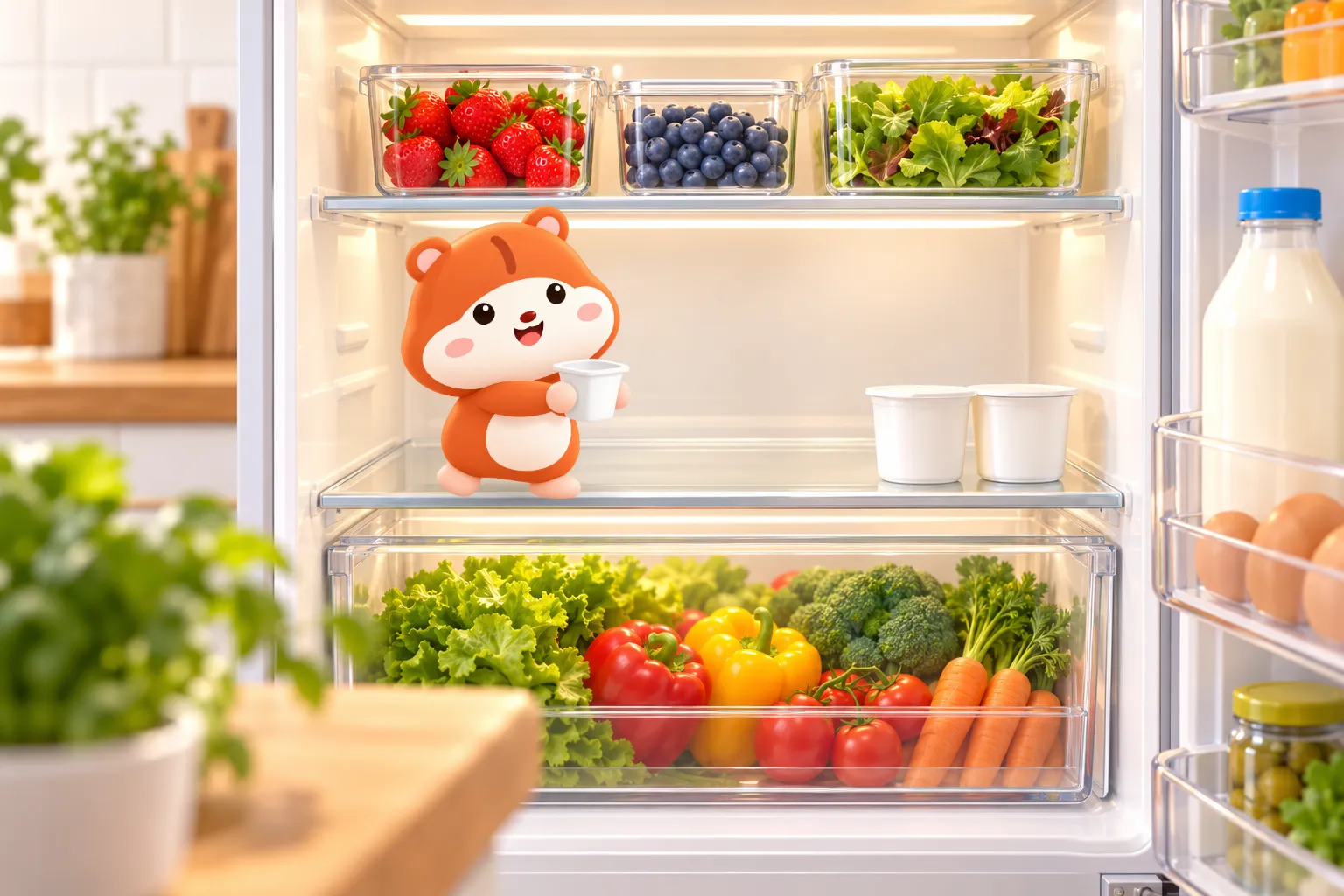
- Group similar things together: dairy with dairy, sauces and condiments together, vegetables in the drawer.
- Use clear containers for leftovers and cut vegetables, so you can see what's inside without opening them.
- Write the date on opened jars and leftovers with a marker or a piece of tape.
- Leave some space. A packed fridge hides food at the back, and you can't see what you have.
4. Leftovers and the freezer
- Cool leftovers and get them in the fridge within two hours. Then eat them within 48 hours, or freeze them.2
- The freezer is a pause button.2 Freeze anything you won't eat in time, at the latest by its use-by date.2
- Once it has fully defrosted, eat it within 24 hours.2
5. Shop with what's already there
Most waste starts at the shop. Before you go, take a quick look in the fridge, or better, in a list of what you already have, and buy only what you'll eat before it goes off.
Questions
What temperature should my fridge be?
Between 0 and 5°C, according to the UK Food Standards Agency, or 4°C (40°F) or below according to the US FDA.2 3 Check it with a fridge thermometer.
What do the numbers on my fridge dial mean?
Usually they're settings, not degrees, and fridges differ in which way is colder, so check the manual. A fridge thermometer shows the real temperature.2
How long do leftovers last in the fridge?
Eat them within 48 hours, according to the UK Food Standards Agency, or freeze them. Cool them and put them in the fridge within two hours of cooking.2
Can I put hot food straight into the fridge?
Let it cool first, but get it into the fridge within two hours of cooking.2
How do I stop forgetting food at the back of the fridge?
Use first in, first out: put new shopping behind older food, and keep one "eat me first" spot at the front. An app like Keepy can remind you before things reach their date.
Sources
- Love Food Hate Waste inspires 1 in 3 people nationwide to act on food waste, WRAP, 2020
- How to chill, freeze and defrost food safely, Food Standards Agency (UK)
- How to Cut Food Waste and Maintain Food Safety, U.S. Food and Drug Administration, 2024
- PAHO/WHO recommends five keys to safer food, Pan American Health Organization / World Health Organization, 2015
Facts checked against the sources on 24 Oct 2026. This guide explains what labels and official advice say. It isn't medical advice, and the pack and official guidance in your country come first.